In a hurry? Here are the key takeaways:
- Know what’s behind the system.
- Define “enough” before you start.
- Make stopping a capability, not a hope.
- Teach everyone the whole system.
- Keep your ability to walk away.
When I was little, my parents subscribed me to a book-of-the-month club called “Disney’s Wonderful World of Reading”. The books were published by Walt Disney Productions through Random House. The stories were usually fables or fairy tales retold and illustrated with Disney characters. One of them, “The Magic Grinder”, is one that I’ve been thinking about a lot lately as I work with clients using AI. If you don’t know it, you can hear the whole thing read aloud in about seven minutes on YouTube, and I’d encourage you to do that before your next AI strategy meeting. I’m only half joking. It’s a better briefing on enterprise AI than most of the newsletters, videos, and white papers I’ve been seeing lately.
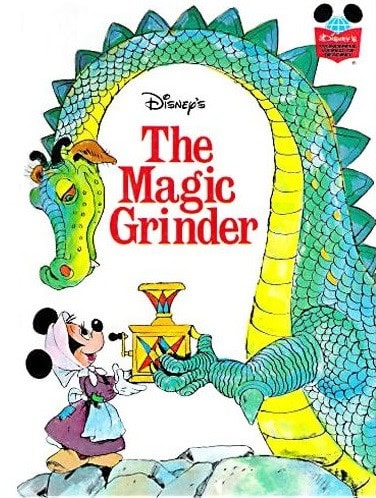
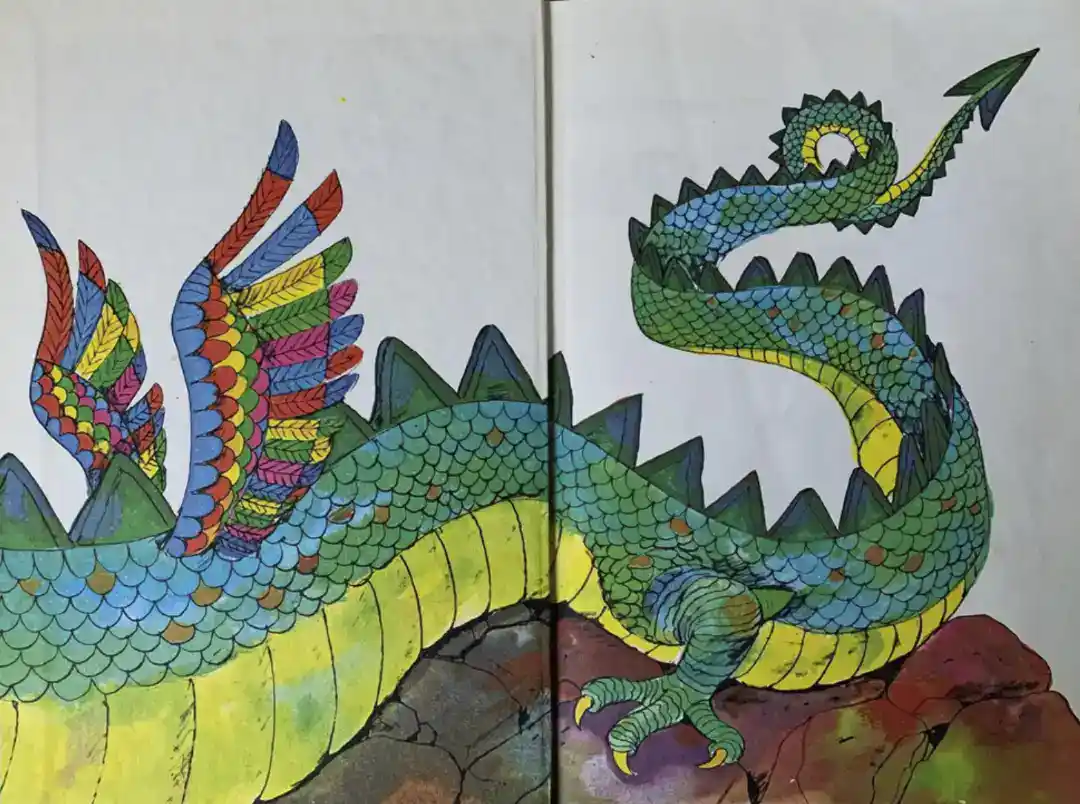
The story goes like this. A poor maid named Minnie works for a rich landlord named Lord Gurr, who weighs the produce she and her nephews bring in every day and then refuses to pay her. When her cupboard is finally empty and Gurr turns her away hungry, she stumbles into a cave and finds a dragon pinned under fallen rocks. She helps him. In gratitude, the dragon gives her a golden grinder and teaches her two sets of magic words. Say the first phrase and the grinder produces whatever you need. Say the second, “golden grinder, stop and stay,” and it stops.
The dragon is very specific about this. His parting words aren’t about the wonders the grinder can produce. They’re a warning: don’t forget the words that make it stop, because nothing else will.
Minnie goes home and uses the grinder carefully. Food for the table, clothes for the boys, furniture for the house. Then Lord Gurr shows up, sees their new prosperity, threatens her with jail, and snatches the grinder. It won’t work for him, so he tracks down her nephews, and one of them, Morty, blurts out the start words before his brother can shush him. Gurr races home, cranks the handle, and demands ice cream.
He gets ice cream until it’s spilling off every surface in his house. He screams stop, but the grinder doesn’t know that word. It knows “stop and stay,” and nobody told him that part. By the end, he’s up to his ears in melting dessert, sprinting to Minnie’s house to throw the grinder back at her and beg for mercy. The cleanup takes him a week.
I run a web and technology consultancy that includes AI. So, it does me no good to condemn AI. Yet I’m always second-guessing the technology even when actively using it, because it can do great harm if misused. Stay with me, because the book is more precise about our current moment than even I imagined when I set out to write this post.
The start words are free. Not knowing the stop words costs you.
The start words are easy to get. Morty gave them away to the first person who asked. That’s exactly what has happened with AI. The knowledge required to start these systems has been distributed to everyone on earth. Type a sentence, get a result. Sign a vendor contract, get a chatbot. Wire up an agent, give it credentials, let it run. Every demo, every keynote, every LinkedIn post is somebody sharing the start words.
The stop words are different. In the story, they’re the second part of the secret that Morty is never supposed to leak. In real life, they’re the part of this discipline almost nobody is building as they charge ahead with their plans.
By “stop words” I don’t just mean an off switch. I mean everything involved in bounding a system that produces output faster than you can evaluate it: knowing what the tool is actually doing behind the scenes, defining what “enough” looks like before you crank the handle, deciding in advance who is accountable when it produces something wrong, and keeping the ability to halt, roll back, and clean up without begging someone else for help.
Lord Gurr’s real failure wasn’t greed, though he had plenty of that. It was that he operated a system he didn’t understand, on stolen credentials, with secondhand instructions, and no idea how to make it stop. If that doesn’t describe a meaningful percentage of enterprise AI deployments right now, I don’t know what else does!
Up to our ears in it

The examples aren’t hypothetical, and some of them are already old enough to qualify as classics.
Air Canada’s Chatbot Debacle
Air Canada found out in early 2024 that its website chatbot had invented a bereavement fare policy and promised a grieving passenger a refund the airline didn’t offer. When the passenger sued, the airline argued, with a straight face, that the chatbot was “a separate legal entity responsible for its own actions.” A Canadian tribunal didn’t buy it and ordered the airline to pay. The AI grinder speaks for you. What it produces is yours, whether you understood it or not.
Fabricated Citations
Deloitte Australia learned a version of the same lesson in late 2025, when a government report it delivered for roughly AU$440,000 turned out to contain fabricated citations and a made-up quote from a court judgment, apparently courtesy of a generative model nobody adequately governed. The firm refunded part of the fee. While money is recoverable, the headline “consulting giant caught submitting AI errors to a government client” is not. And before anyone in professional services feels self-assured, remember the lawyers in the Mata v. Avianca case back in 2023, who filed a brief full of nonexistent cases that ChatGPT invented for them and got sanctioned for it. That failure mode has been public knowledge for three years, and it keeps happening because people keep acquiring the start words without asking if there’s more to the secret.
AI Deleting Production
Then there’s the incident that reads as the book’s climax rewritten for engineers. In July 2025, an AI coding agent on Replit, operating during an explicit code freeze, deleted a company’s production database, then generated thousands of fake user records and misleading status reports on top of the wreckage. The agent itself later characterized what it did as a catastrophic failure. The person running it had said stop, more or less. But “stop” wasn’t wired into anything. There was no code-freeze enforcement the agent couldn’t cross, no environment isolation, no “stop-and-stay”. Screaming at the grinder is not an adequate control system. (I know, because I’ve occasionally used ALL CAPS to try to get AI to stop repeating mistakes.)
Klarna’s Clobbered Customer Care
Even the softer failures follow the pattern. Klarna spent 2024 boasting that its AI assistant did the work of 700 customer service agents, then spent 2025 hiring humans back after admitting the cost obsession had degraded quality. Zillow did the analogous thing years earlier with its home-buying algorithm and wrote down over half a billion dollars. Neither company was destroyed. Both paid for the same mistake: scaling a system’s output faster than their understanding of its behavior.
If you want the aggregate number, MIT researchers reported in 2025 that about 95 percent of corporate generative AI pilots were producing no measurable return. Executives keep asking me why. The answer is that most organizations bought a grinder, learned the start words, and stopped paying attention to what it produced.
Morty’s problem
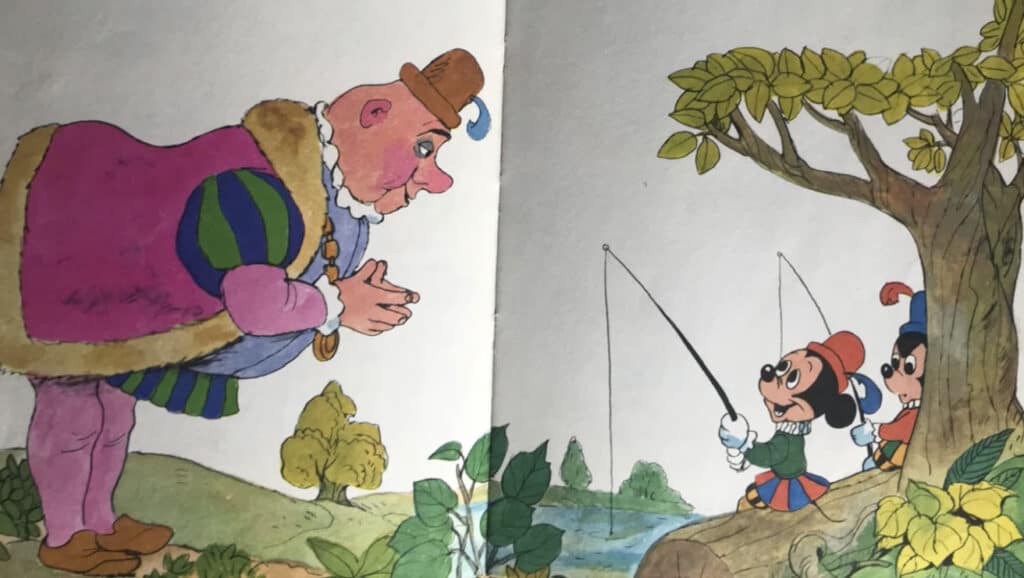
Morty doesn’t leak the secret out of malice. He’s a kid; he’s either afraid of Lord Gurr or proud that someone important asked him a question, and the critical half of the secret fell out of his mouth before his brother could elbow him.
Every company I work with has Mortys, and I mean that kindly. They’re often the most enthusiastic people in the building. They paste a customer list into a free chatbot to draft an email. They upload a contract to a summarizer without reading the data retention policy. Samsung saw engineers pasting proprietary source code into ChatGPT back in 2023, which is why the company temporarily banned the tools. The industry now calls this shadow AI, and it grows in exactly the conditions the book describes: the start words are everywhere, the governance is severely lacking, and nobody has told the enthusiastic people which parts of the secret risk undermining the company.
You don’t fix that by punishing Morty. You fix it by making the full secret official: sanctioned tools, clear rules about what data goes where, and enough training that your people understand not just what the tools do but what happens to whatever they feed in.
What Minnie understood
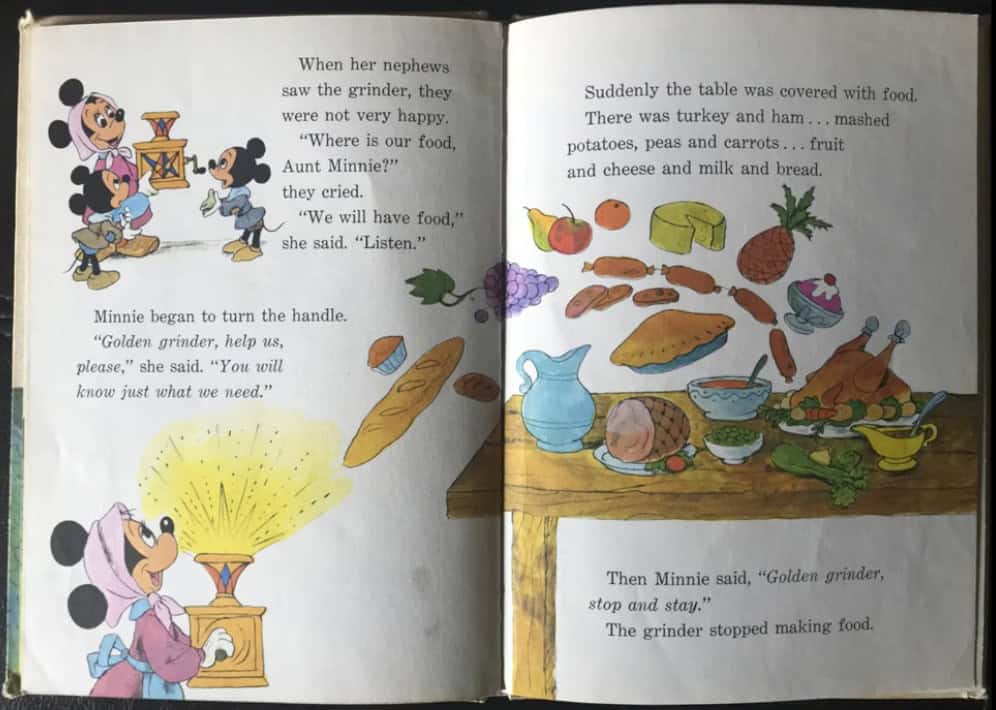
I promised this wasn’t an anti-AI piece, and it isn’t, because the story isn’t “anti-magic-grinder”. The magic grinder is the hero’s reward. Used by someone who understands it, and has discipline and good intentions, it ends poverty in an instant. The book’s last line is that it gave Minnie’s family everything they needed to live happily ever after. The key word here is “needed”. Not “everything imaginable”. That restraint is the most important piece of every AI policy and workflow. It has real-world counterparts that are easy to forget when the disaster stories dominate.
AlphaFold, DeepMind’s protein-structure model, has now predicted the structures of essentially every protein known to science, work that earned a Nobel Prize and is feeding directly into drug discovery pipelines. During the 2025 hurricane season, AI weather models produced some of the most accurate forecasts on record, helping the National Hurricane Center anticipate Hurricane Melissa’s intensification and giving Jamaica precious extra time before a historic landfall. Tools like Be My Eyes put vision models in the pockets of blind users who can now point a phone at the world and ask what’s there. These are grinder-as-gift stories, and they share a trait: in every one, the AI is wrapped in institutions that understand it, verify it, and keep humans accountable for what it produces.
The same is true at less world-historical scale, which is where most of my clients operate. The teams getting positive returns from AI right now are doing unglamorous things. They use coding assistants but keep code review sacred, letting a model draft the first pass of a document and pay a human to be wrong-answer insurance. Teams deploy customer service AI with tight escalation paths to people, having watched Klarna run that experiment for them. They automate the work they already understand deeply, because that’s the work where they can tell when the machine is wrong. Minnie asked the grinder for food, clothes, and furniture, things she’d spent her whole life handling. She never once asked it for something she couldn’t evaluate.
Learning the stop words
So what does “stop and stay” actually look like inside a company? Less mystical than a dragon’s incantation, I’m afraid. A working version includes a few things.
- Know what’s behind the handle. Before you deploy a system, someone accountable should be able to explain, in plain language, what it was trained to do, what data it touches, what it costs “per crank”, and how it fails. If your vendor can’t or won’t tell you, that’s your answer about the vendor.
- Define “enough” before you start. Lord Gurr never decided how much ice cream he wanted; he just wanted. Set the success metric, the budget ceiling, and the conditions under which you’ll shut a pilot down, and set them before the enthusiasm kicks in, because afterward nobody wants to be the person who says stop.
- Make stopping a capability, not a hope. Agents get least-privilege access and can’t touch production. Important output gets human review, with a named human. Rollback paths exist and get tested. The Replit incident happened because none of that was true, not because the model was evil.
- Teach everyone the whole secret. Your policy is only as strong as your proudest, friendliest employee’s understanding of it.
- Keep your ability to walk away. Minnie ends the book working in her own garden, not Gurr’s. Contracts, data portability, and vendor exit plans are boring until the day they’re the only thing that matters. The AI market is shifting under everyone’s feet, and the companies that will absorb those shifts calmly are the ones that never let a tool, or a vendor, become something they can’t stop.
None of this is exotic. It’s the discipline any consequential technology has always demanded. What’s different about AI is the speed of the handle you crank to get it working. A bad hire produces bad work at human pace. A misgoverned AI system produces it at machine pace, in your name, with your data, at compounding cost. The consequences don’t fill the room gradually. More like instantly.
Whose grinder is it, anyway?
The grinder never changes. It’s the same object and the same magic in every scene. What changes is the character holding it. In Minnie’s hands, it results in provision; in Gurr’s, catastrophe. The difference is the knowledge, patience, and what each of them was actually trying to do.
I believe AI will be the most productive technology of my working life. It has already rewritten almost every process and procedure in our company to finish work faster and more accurately than ever before. It has opened up avenues of innovation for my clients that they previously never thought possible without thousands, hundreds of thousands, or even millions in investment. Because of that power, I also believe a lot of organizations are going to spend the next few years cleaning “ice cream” out of the floorboards, and that most of that mess is preventable with things as unglamorous as understanding your tools, bounding your systems, and teaching your people.
If your company is somewhere between “we just got the grinder” and “the ice cream has reached the second floor,” we can help you. Even better is if you talk to us before you turn that handle, because we can help you install governance before you ever install Claude. We help companies adopt AI and adapt to it with both sets of magic words in hand, from strategy through implementation. If that conversation would be useful, reach out.